Lace vs. poly hair systems: base construction and measurements
Understand lace, polyurethane, and combination hair system bases, and learn what measurements and photos to prepare before discussing a suitable configuration.
Choose the base and coverage area together
A hair system base is the foundation that holds the hair and sits over the area you want to cover. Comparing lace and polyurethane, often called poly or skin, is easier when you already know the approximate coverage area and intended attachment routine. A material name alone cannot tell you whether a particular piece can be adapted to your shape, preferred hairline, or daily habits.
Write down the questions that matter to you: how the base is constructed, its stated thickness, the available size, how to handle it during removal, and which products are compatible with it. Compare the exact reference in the catalog. Ask for clarification where the photographs or specification do not provide enough detail.
What a lace base means
A lace base uses a mesh construction to which the hair is attached. French Lace and Swiss Lace are familiar product labels, but two systems with a lace name may still have different construction details. Review the actual listing for the reference you are considering instead of assuming all lace products behave the same way.
The visible result at the front also depends on density, color, positioning, and haircut. Show the team how you expect to style the hair, especially if you want to brush it away from the forehead. Discuss attachment and cleaning instructions for the particular base. Rough handling while adhesive residue remains can damage a delicate piece.
What a poly or skin base means
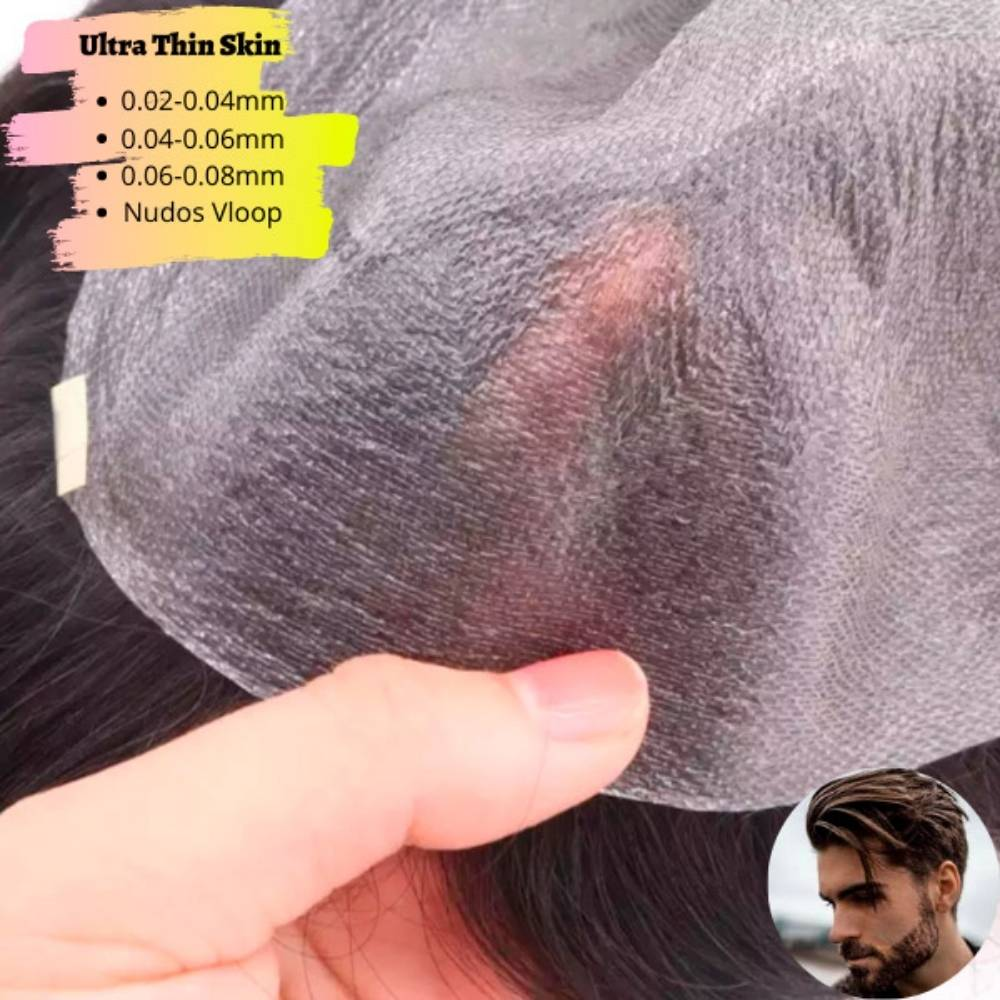
Poly systems use a polyurethane base. Check the stated thickness and hair-insertion method for the precise variant. Names such as Ultra Skin identify product ranges, not a universal thickness or guaranteed service life. Thinner construction may require careful handling, so consider who will fit, remove, and care for the system.
Do not assume that an adhesive or removal method used on a previous lace system is suitable for a new poly base. Ask which products and routine the supplier recommends for that model, then follow their instructions. Discuss your experience level and any help you expect to have available.
Look at combination bases by zone
A combination base may use mesh in one area and polyurethane around part of the perimeter. The location and width of those sections matter when discussing attachment and possible trimming. Two products described as combination systems may have different layouts. A diagram or clear view of the underside can help you understand what you are comparing.
Explain the coverage you need before choosing a piece that would require major resizing. A base that can be trimmed to one contour is not necessarily suitable for every contour. Have the team confirm the intended adaptation before cutting or altering a product.
Prepare the measurements and template
Follow the guided measurements and record each width and length with its position and unit. The three horizontal references and the front-to-back measurement should describe the requested points consistently. Keep the tape in the position shown and repeat the reading. If you are uncertain about an endpoint, ask for help rather than moving it until a preferred number appears.
A head template provides additional contour information when requested. It does not replace the recorded measurements, and measurements do not fully describe a curved surface. Use the specified method and send the result for review before a customized order is finalized.
Photograph dry hair in natural light
Provide clear side, rear, and top photographs. Natural light and dry hair make the retained hair and coverage boundary easier to assess. Avoid filters, wet styling, and lighting that hides the edges of the area. Keep the photographs private by uploading them through your account.
Store the agreed dimensions, base reference, color code, gray percentage, and other preferences together. When replacing a system, compare those details with your current needs. This creates a better starting point than relying on the name of an older piece.
Confirm the ordering arrangements
My Special Hair operates from Spain and displays prices in euros. Current online delivery methods cover supported destinations in Spain and Europe. U.S. shipping is not offered in checkout, and the European rate is not a U.S. delivery quote. Customers in the United States should contact the team before ordering to establish whether delivery can be arranged and what conditions would apply.
Learn more about the business on the about page, and include the product reference and your location when asking for help.